
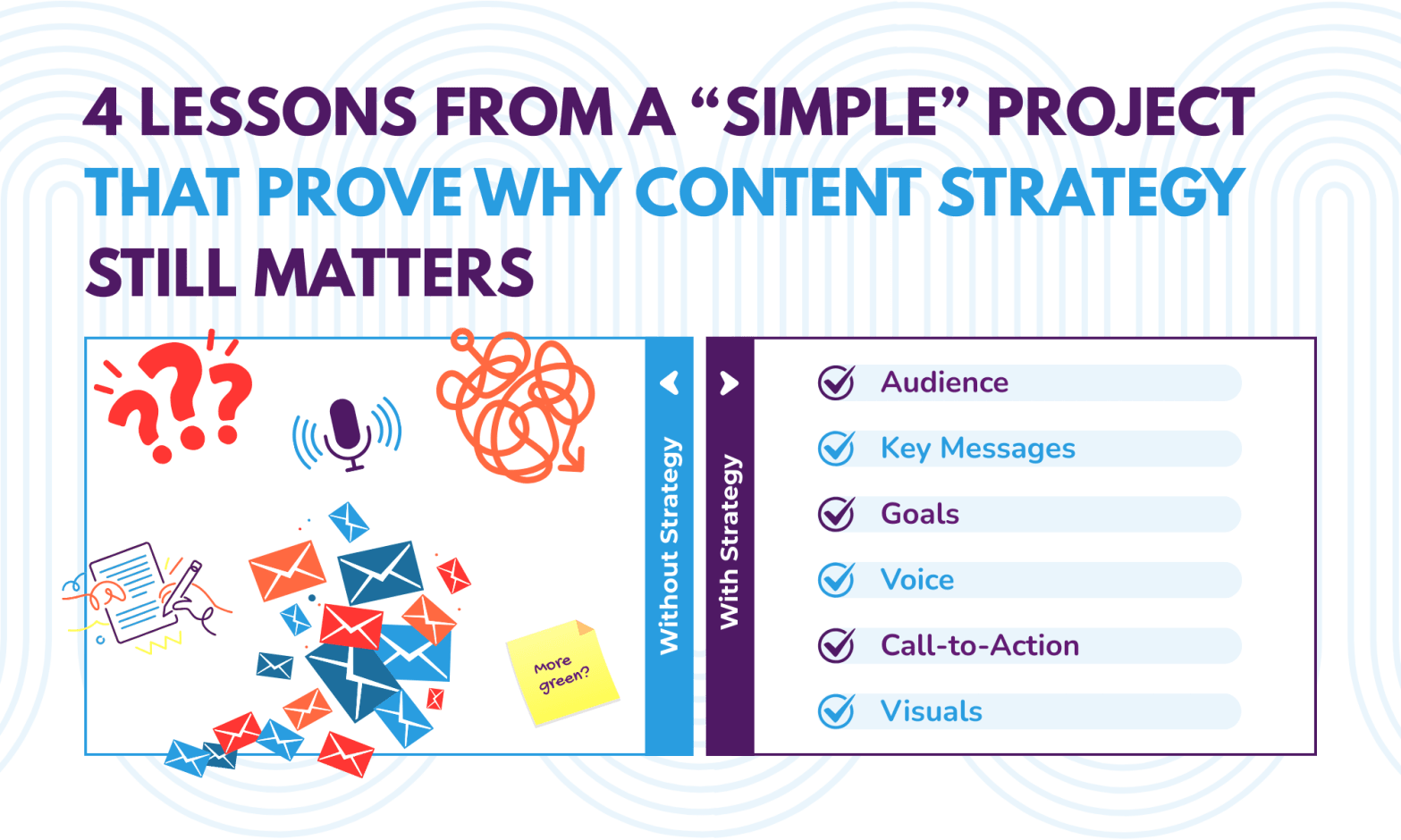
Sometimes a “simple” project turns out to be anything but. These four lessons reveal why content strategy is still your most valuable marketing tool.
The Vibe Was Off. So Was the Strategy.
You’ve probably heard it before: “It’s just a simple landing page.” Or maybe, “Can’t AI do this now?”
But behind that “simple” request is often a mix of unclear messaging, scattered ideas, and last-minute demands. I came across a Reddit post that captured this perfectly. A freelancer was hired for what sounded like a quick website task, only to end up decoding vague whispered voice notes, calming chaotic energy, and rewriting a document that read like a mix of horoscope predictions and WhatsApp rants.
It’s funny until it happens to you or your business. You might be thinking that this seems like a freelancer problem, but it’s really a strategy problem.
Let’s look at what we can learn from this and why even small business owners who handle their own marketing benefit from having a clear content strategy.
 1. Clarity Wins Over Cleverness, Especially With AI in the Mix
AI tools can write copy and website builders can create layouts automatically. But they don’t know your business, your customers, or how to turn interest into action. That still requires a person with real experience and a plan.
In the Reddit post, the client expected a polished, high-converting page, but the copy provided was disjointed, unfinished, and unclear. Lines like “pls insert something that builds emotional buy-in” don’t just miss the mark; it shows there wasn’t a mark to begin with.
Takeaway: Strategy doesn’t mean making things more complicated. It means knowing what you’re trying to say and who you’re saying it to before you start marketing. AI can help execute your strategy, but it can’t define its direction. That’s where human marketers still shine.
 2. Clear Feedback Starts With a Clear Strategy
As a business owner, you might find yourself giving quick feedback like “make it pop” or “can we add more green?” And in your head, it makes perfect sense. But without a shared strategy, those requests can feel vague to the person doing the work, whether it’s a freelancer, an employee, or even yourself if you’re trying to DIY it.
This is where content strategy plays a quiet but powerful role. When you’re clear on your goals, audience, tone, and structure, feedback becomes focused. You’re not relying on someone else to interpret your vibe. You’re guiding them with direction.
Takeaway: Putting in strategic thought at the start keeps your project from turning into a guessing game. Being clear from the beginning saves time, money, and effort.
 3. Budget and Expectations Need to Match
The freelancer in the Reddit post cleaned up the copy, finished the landing page, and received a one-line comment from the client: “make it more… green.” It might sound unrealistic, but it happens more than you think. High expectations without a clear plan or fair budget often lead to disappointment.
Sometimes what starts as a “quick project” turns out to need a lot more: clear messaging, consistent brand voice, and thoughtful structure. That’s not a bad thing; it just means your expectations and your budget need to match. When they do, the results are better for everyone.
Takeaway: If you’re asking for help, be clear about what you need. If you’re doing it yourself, give yourself some grace. Strategy isn’t about being perfect, it’s about giving yourself a clear direction so your efforts actually work. Learning strategy takes time, and rushing usually means you’ll have to redo things.
 4. Strategic Marketers Are Translators, Not Just Executors
In this case, the freelancer successfully turned scattered, chaotic input into a landing page that a real person might actually want to read. That’s not just design. That’s translation.
That’s what skilled marketers do. They turn unclear ideas into clear messages, spot gaps in logic, and build trust through flow, tone, and structure. No template can do that for you.
Takeaway: Good marketing isn’t just writing or designing. It’s about bridging the gap between what you want to say and what your audience needs to hear. And doing it in a way that moves people to act.

AI Can’t Replace Strategy (and Neither Can Vibes)
The gig economy, AI tools, and instant access to freelancers have made marketing feel more plug-and-play. But what this story reminds us is that marketing without strategy is still just noise.
Whether you’re hiring help or creating your own content, the most valuable thing you can do is slow down and get clear on what you want to say and who you’re trying to reach. That’s the heart of content strategy. It’s what turns vague ideas into messaging that works.
Not Sure Where to Start? Here’s What I Recommend:
 How do I actually create a simple content strategy for my business?
Start with three core questions:
- What do you want your customer to know?
- What do you want them to feel?
- What do you want them to do?
Write down 3 to 5 key messages you want to repeat often; these become the backbone of your content strategy. If every post, page, or email supports one of those points, you’re already building clarity and consistency.
How do I know what a fair budget for content strategy or freelance help is?
A fair budget depends on what you’re really asking for. If you’re looking for someone to write a quick blog post, the cost might be low. But if you need help shaping your voice, refining your message, or building a strategy that supports long-term goals, expect to invest more, often in the $500–$2,000 range for foundational work.
Not ready for that yet? Start small. A one-time brand messaging session or strategy review can give you tools you’ll use across every platform.
Are there specific ways AI can help me, or should I avoid it entirely?
AI can help, as long as you stay in control. Use it to speed up tasks like:
- Brainstorming ideas
- Creating outlines
- Repurposing content you’ve already written
But don’t let AI speak for your brand. Even if you created a custom GPT, it doesn’t know your clients, your voice, or your values. Treat it as a quick helper, not your final editor.
Curious how this applies to your business?
I work with small business owners to clarify their content, build better systems, and stay visible with less stress. If content strategy feels like the missing piece, I’d be glad to help you figure out where to start.
Discover more from CGL Marketing | Digital Marketing for Small Business
Subscribe to get the latest posts sent to your email.
