

SEO vs. AEO: What Small Businesses Need to Know to Get Found Online
If you’re a small business owner trying to get found online, you’ve probably heard the phrase “use the right keywords.” Sounds simple, right? But in reality, showing up in search results takes more than dropping a few phrases into your website. Between SEO, AEO, and ever-changing algorithms, it can feel like you’re shouting into the void while bigger brands dominate the spotlight.
The good news? You don’t need a massive budget or a team of tech wizards to improve your visibility. You just need to understand how the search game works today—and how you can play it smart.
In this post, I’ll break down SEO and AEO in plain language, show how they overlap, and explain how small businesses can use both to their advantage.
Part 1: What Is SEO (Search Engine Optimization)?
SEO is the process of optimizing your website and online presence so that search engines (like Google or Bing) understand what your business does and decide to show it to people who are searching for related products or services.
In short, SEO helps your business show up in traditional (non-paid) search results. This differs from paid ads, which are labeled as “Sponsored” and can appear at the top, middle, or bottom of the results page, depending on the search and ad settings. While ads are paid placements, SEO helps your business earn visibility organically by offering relevant and helpful content.
Key Elements of SEO
 Website content: Use relevant keywords in your service pages, blog posts, and FAQs. For example, if you’re an insurance broker, you might use structured phrases like “life insurance California,” “Walnut Creek insurance broker,” or “affordable car insurance Oakland.” These types of keywords help search engines understand what your business offers and where you’re located.
Meta titles and descriptions: These elements are part of your website’s code and appear in search results. The meta title is the bold headline people see in Google when your page appears. The description is the short sentence underneath it. Think of these like your ad for that page—they help search engines and people quickly understand what the page is about and why they should click.
Mobile-friendly design: More than 50% of all searches happen on phones. If your website isn’t easy to read or navigate on a mobile device (known as “responsive design”), users will likely leave quickly, and Google takes that behavior into account. A poor mobile experience can harm your rankings and lead to the loss of potential customers.
Fast loading speed: Google rewards websites that load quickly. A slow website can frustrate users, increase bounce rates, and negatively impact your search engine rankings. Things like oversized images, unnecessary plugins, or poor hosting can all drag down your site speed.
Internal and external links: Links help search engines see your content as valuable and connected. Internal links are links between pages on your own website (like linking from your homepage to your blog or contact page). External links are links that go out to or come in from other reputable websites. Both types of links help search engines understand what your site is about and how trustworthy it appears to be.
For local businesses, Local SEO is essential. It’s important to optimize your website by including local keywords (such as “dentist in East Sacramento”) and ensure your Google Business Profile is complete and up to date.
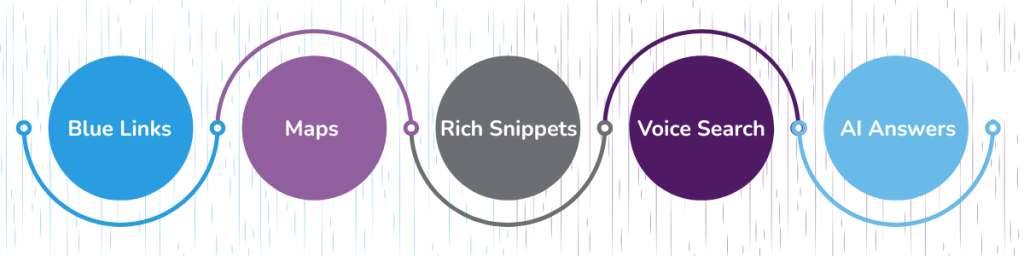
Part 2: What Is AEO (Answer Engine Optimization)?
AEO is a relatively new concept, but it’s quickly gaining significance. Instead of focusing on getting clicks to your website, AEO is about making your content easy for AI-powered tools to pull answers directly from your site into their results.
If you’ve ever asked Siri, Alexa, or Google a question and heard a spoken answer, or seen a box at the top of the results page that summarizes the answer, that’s AEO in action.
In short: AEO helps your business be the answer.
Where AEO Shows Up
- Google’s AI-generated results (part of what they call the Search Generative Experience, or SGE)
- Voice assistants like Siri and Alexa
- Chatbots and tools like Bing AI or ChatGPT
Key Elements of AEO
 Question-based content: Think about the actual questions your customers ask you every day; those make great blog posts, FAQs, or even short paragraphs on service pages. AI tools love content that provides direct answers. For example: “What does renters insurance cover?” or “Is there a plumber open on Sundays near me?”
Structured formatting: Use clear headings, bullet points, and short sections. Doing this helps AI tools quickly understand and extract the key points. A messy or text-heavy page can be hard for both people and machines to navigate.
Updated business profiles: Your Google Business Profile isn’t just for maps—Google uses it to answer questions like your hours, location, or what services you offer. Make sure it’s accurate, includes current photos, and features a comprehensive Q&A section.
Detailed reviews: Reviews tell search engines and AI tools what people think of you—but they also help describe your services. Encourage customers to write reviews that mention what they got and where. For example: “Quick and professional oil change at Joe’s Auto in East Sacramento.”
Conversational phrasing: Write the way people talk, especially when creating content that could show up in voice search. Instead of “quality dental services,” try phrases like, “Who’s the best dentist near me for kids?” It feels natural and aligns better with how people actually search.
Part 3: SEO vs. AEO: What’s the Difference?
While SEO and AEO overlap in many ways, they serve different purposes in today’s search landscape:
| FEATURE | SEO | AEO |
|---|---|---|
| Goal | Rank in search results | Appear as direct answers |
| Audience | Search engine users | AI tools and voice assistants |
| What Users See | Clickable listings, website links, map results | Snippets, summaries, voice replies |
| How You Should Write It | Keyword-focused and structured for search engines | Conversational, clear, and Q&A-style content |
| Tools | Google Search, Bing | SGE, Siri, Alexa, ChatGPT |
Think of SEO as getting your shop to appear on the map, and AEO as getting someone to recommend your shop before they even look at the map.
Part 4: Why This Matters More Than Ever for Small Businesses
Most small businesses lack the time and budget to compete with national chains on traditional SEO terms. But you don’t need to. Instead, you can:
 Niche down: Use specific, local-friendly phrases. For example, instead of trying to rank for “insurance broker,” aim for “independent insurance agent in Walnut Creek” or “affordable car insurance for college students in Berkeley.”
Answer real questions: Show up when people search how they actually talk. A yoga studio might answer, “Is there a beginner yoga class near me on Sundays?” or a bakery could write a post titled, “Where can I get gluten-free cupcakes in Oakland?”
Build trust locally: Through reviews, consistency, and community visibility. For example, a pet groomer in Sacramento who collects detailed Google reviews, such as “My poodle Bella always looks amazing after her visit to [Business Name] in East Sac!” will build credibility faster than one relying solely on a website.
This combo of SEO and AEO helps small businesses compete in a way that feels authentic and doable.
Part 5: How to Get Started Without the Overwhelm
Here are five practical steps you can take right now to improve both SEO and AEO. You don’t need a tech team to get started — but if you’d like expert support, I’m here to help.
1. Claim and Update Your Google Business Profile
Make sure it has:
- Accurate business hours
- Current photos
- Location and service areas
- Short Q&A section
2. Add an FAQ Section to Your Website
Consider the questions people ask before hiring or buying from you. Examples:
- How much does a massage cost in [neighborhood]?
- Do you offer same-day appointments?
- What forms of payment do you accept?
3. Use Local Keywords Naturally
Not just “wedding photographer,” but “wedding photographer in Oakland, CA.” Mention neighborhoods, landmarks, or events that matter to your customers.
4. Collect Reviews with Details
Encourage happy customers to mention:
- The specific service they received
- Your business name
- Your city or neighborhood
5. Write Blog Posts That Answer Questions
Blogging might feel like a time-consuming task, but it can be one of the most effective ways to improve both SEO and AEO. Every blog post you publish gives search engines new content to index, helps establish your authority on a topic, and makes it more likely that your business shows up when someone searches for answers in your area.
These don’t have to be long. Just helpful, clear, and relevant. Even short, focused blog posts that answer a specific question can be highly effective. Think of them as answers you’d give your customers in a conversation—just written out so search engines (and AI tools) can see and share them.
Post Examples:
- What should I look for in a financial advisor near me?
- What to look for when choosing a yoga studio in Sacramento?
What This Means for You
If you’re a small business owner, the real challenge isn’t being the biggest — it’s being visible to the right people at the right time. SEO and AEO work together to help you do just that.
It might sound like a lot, but you don’t have to tackle everything at once. Start with one page. One question. One review. Over time, these small steps build momentum that can help your business show up, stand out, and succeed in the search-driven world we live in.
And if you’re still not sure where to start? Reach out. I’m always happy to help small businesses make sense of marketing—without the overwhelm.
Discover more from CGL Marketing | Digital Marketing for Small Business
Subscribe to get the latest posts sent to your email.
